Why Brown, Lyle, GN, Freeman and NAS Came Together as One BMG
Learn why these select companies came together to form the thermoforming, tooling and automation powerhouse BMG
Archive
Learn why these select companies came together to form the thermoforming, tooling and automation powerhouse BMG
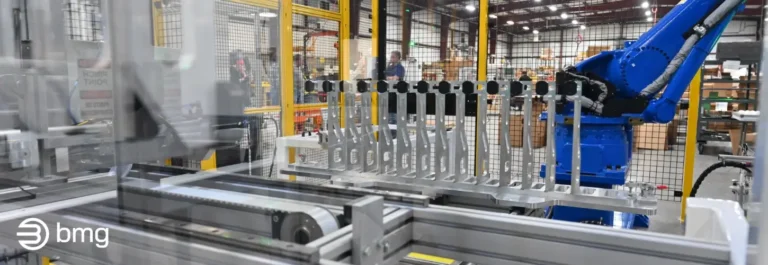
How tooling and automation work together for your product

Discover why modern thermoforming and end‑of‑line automation, combined with today’s federal capital depreciation rules, create an urgent opportunity to cut costs and boost throughput.

Current federal tax law gives manufacturers a rare chance to write off up to 100% of qualifying capital investments in the same year they place them in service.

See how accelerated federal tax depreciation can transform BMG thermoforming and end‑of‑line automation projects into faster payback, stronger cash flow, and sustainable productivity gains.
This article highlights five strategic reasons to choose BMG for your next thermoforming machine. BMG offers a comprehensive portfolio of high-speed, low-waste thermoformers tailored for both plastic and paper packaging. By combining fully integrated tooling and end-of-line automation with decades of industry expertise and dedicated lifecycle support, BMG helps manufacturers reduce scrap, lower cost per part, and maximize long-term ROI.
This comprehensive troubleshooting guide explores ten common thermoforming defects—such as wall thinning, webbing, warping, and misregistration—and outlines practical steps to eliminate them. By clearly mapping each defect to its typical root causes, the article empowers plant managers and operators to implement targeted process controls. From optimizing heater zoning and balancing cooling circuits to maintaining proper index parameters, these actionable insights will help manufacturers reduce scrap, stabilize cycle times, and maximize Overall Equipment Effectiveness (OEE).
This straightforward guide breaks down the thermoforming manufacturing process into five essential steps specifically tailored for packaging teams. By walking through material preparation, precise heating, forming and cooling, trimming strategies, and value-added finishing, the article explains exactly how thermoplastic sheets are transformed into high-quality, shelf-ready packaging. Furthermore, it highlights the strategic advantages of thermoforming—such as cost-effective tooling, rapid speed to market, and sustainable design flexibility—equipping engineers and brand owners to make informed packaging decisions for food, medical, and consumer products.